L-Shape Flush Underpinning
Professional Foundation Support for Basement Lowering
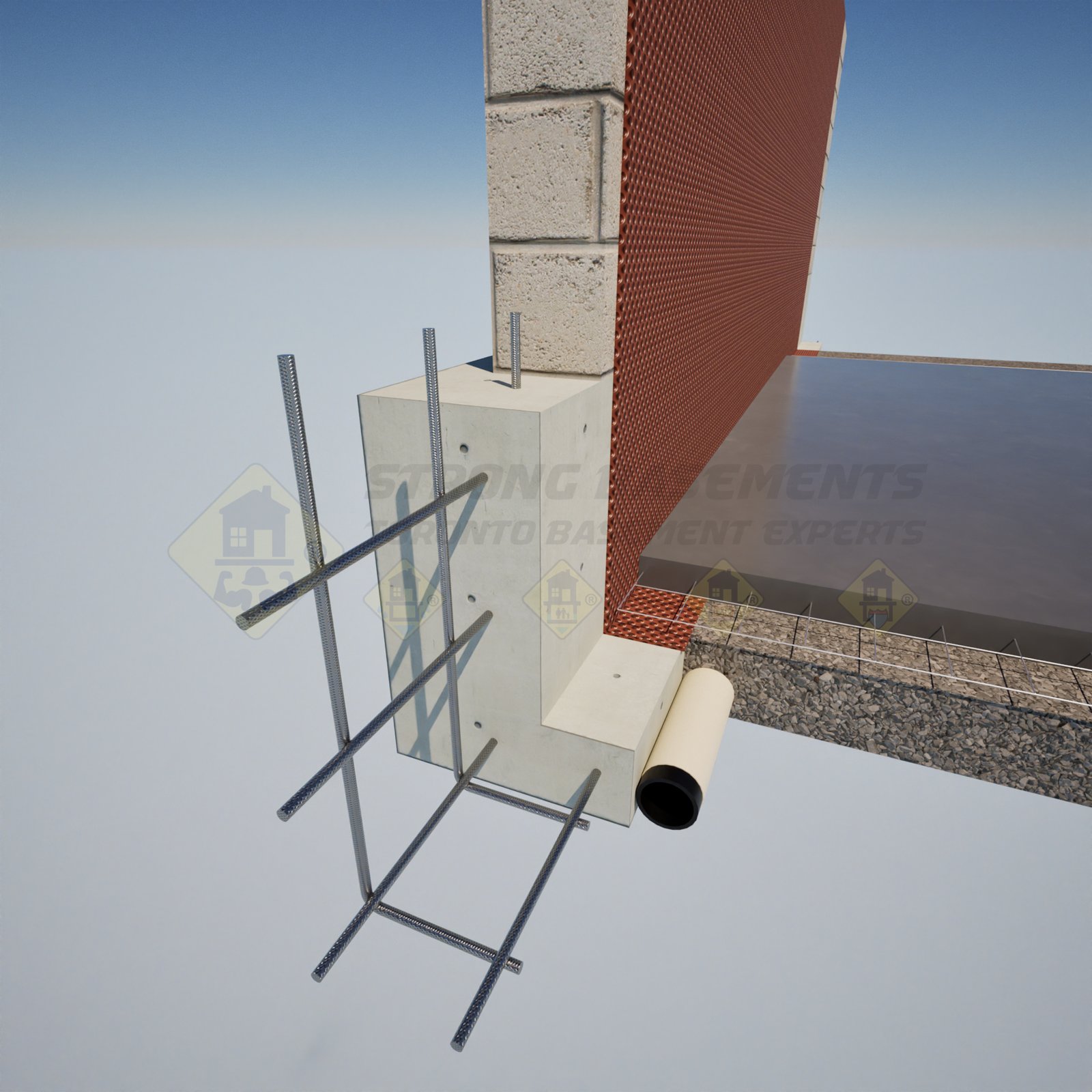
Flush underpinning method is ideal for narrow basements or properties where maximizing interior space is a priority during a basement lowering project. Flush underpinning removes part or all of the original footing and replaces it with a reinforced L-shaped concrete section anchored directly to the foundation wall to keep the interior surface perfectly flush.
Contents
What Is Flush Underpinning?
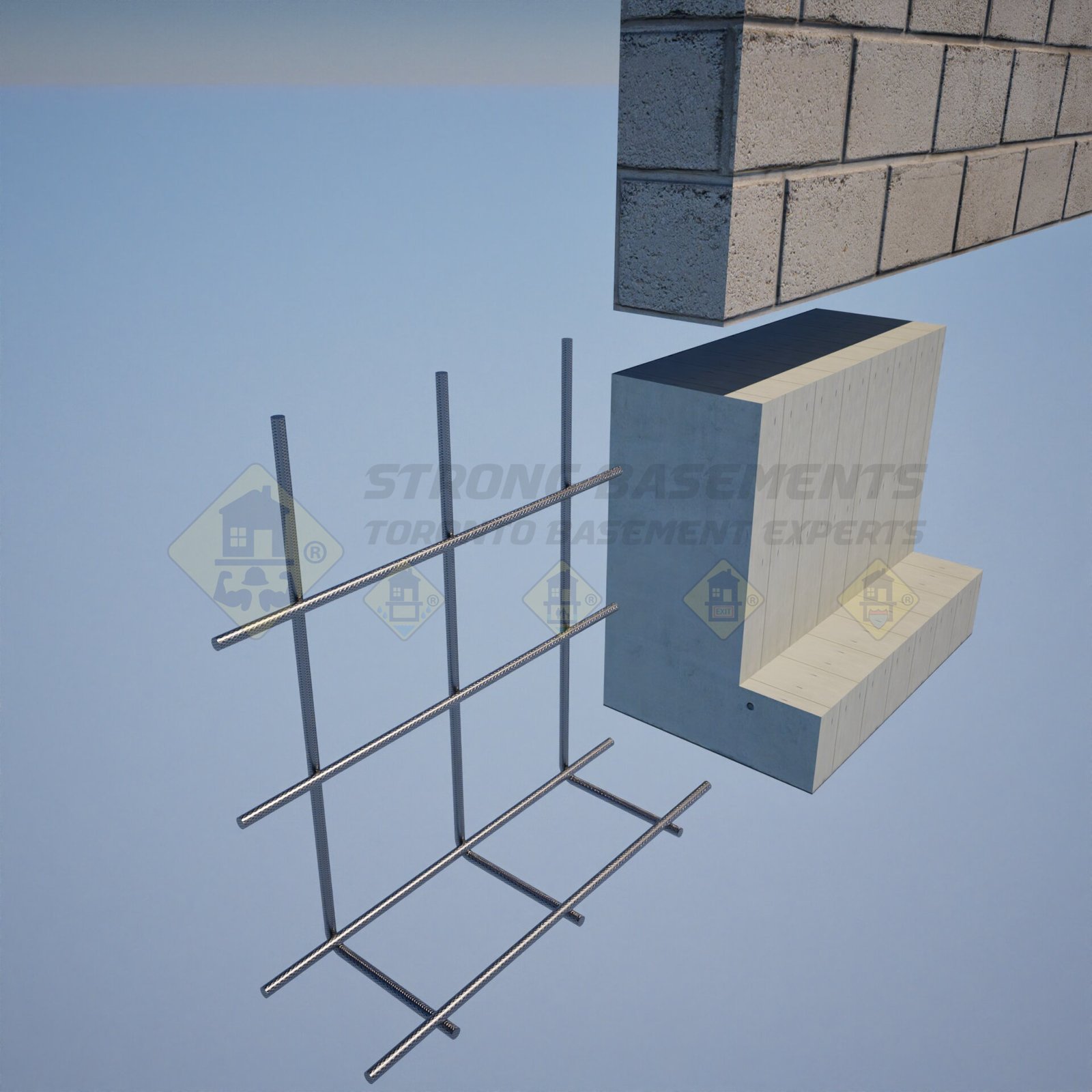
Flush underpinning begins with excavating the section and removing the original footing in the required area. The exposed foundation wall is then anchored with 15 mm steel rebars, followed by installing a 15 mm L-shaped rebar mesh that reinforces the entire step of the new footing, including an 8″ × 8″ horizontal offset beneath the future concrete floor. L-shape concrete forms are set in place, and concrete is poured using the overpour method with a concrete vibrator to ensure proper consolidation and a strong, stable connection to the existing structure.
Underpinning Menu
Flush Underpinning Process
1. Section Layout & Preparation
The foundation wall is divided into numbered underpinning sections according to engineered drawings. Shoring posts, lighting, and equipment are installed to prepare the basement for staged excavation.
2. Stage One Excavation
The first set of flush underpinning sections is excavated to the engineered depth. Soil is removed under the original footing to create space for new concrete footing.
3. First Stage Building & Structural Inspection
A structural engineer inspects the exposed footing area, soil conditions, and excavation depth. The City of Toronto completes a building inspection to confirm compliance with the permit and drawings.
4. Stage One Rebar Installation & Forming
Steel dowels are drilled and anchored into the foundation wall. These form the L-shaped reinforcement, connecting the new footing to the wall. Wood forms are installed to shape the concrete profile.
5. Stage One Concrete Placement
Concrete is poured into the formed section and consolidated with a concrete vibrator to remove air pockets and ensure full settlement. After curing for 24–48 hours, the section reaches working strength.
6. Stage Two Excavation, Rebars & Pouring
The next set of sections is opened, inspected by the City, reinforced, formed, and poured the same way as stage one.
7. Stage Three Excavation & Full Basement Dig-Out
The remaining sections are excavated along with the full basement interior to the new lowered height. A final building inspection confirms code compliance.
8. Final Pouring & Completion
The last set of L-shape sections is poured. After curing, the foundation is ready for interior waterproofing, new drainage, insulation, and a new concrete floor.
Flush Underpinning Cost
-

Flush Underpinning (L-Shape)
$420+Per linear foot of underpinned basement foundation. Includes: Concrete Demolition, Excavation, Disposal, Steel Rebar Reinforcement, Forming, Concrete, Call and Pass Building Inspections.
The cost of L-shape flush underpinning in Toronto starts at $420 per linear foot for excavation depths up to 2 feet. When the basement must be lowered deeper, 3 feet or more, the price increases to $480+ per linear foot due to additional labour and engineering requirements. This method is more expensive than both non-shrink and overpour underpinning because it involves extensive steel rebar installation, anchoring into the foundation wall, and custom concrete formwork needed to create the precise L-shaped profile. Despite the higher cost, flush underpinning offers excellent structural performance while maximizing interior space in narrow basements.
Other basement Underpinning methods
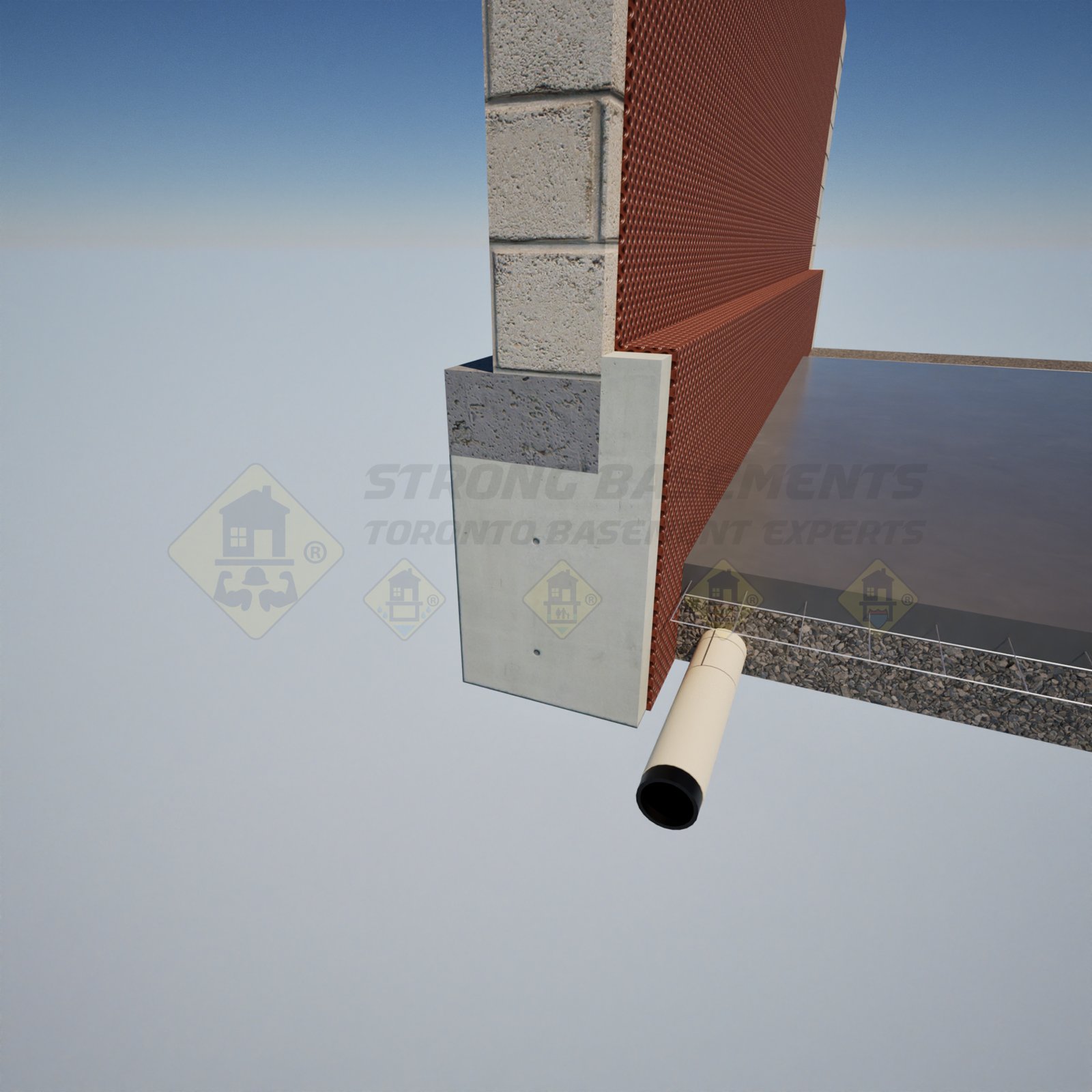
Part of the original footing is removed, and new concrete is poured to overlap the foundation wall, creating a wider and stronger structural base. The concrete is placed using a concrete vibrator to ensure full settlement and to eliminate air bubbles, improving strength and long-term performance. This is the fastest and most efficient underpinning method for older Toronto homes.
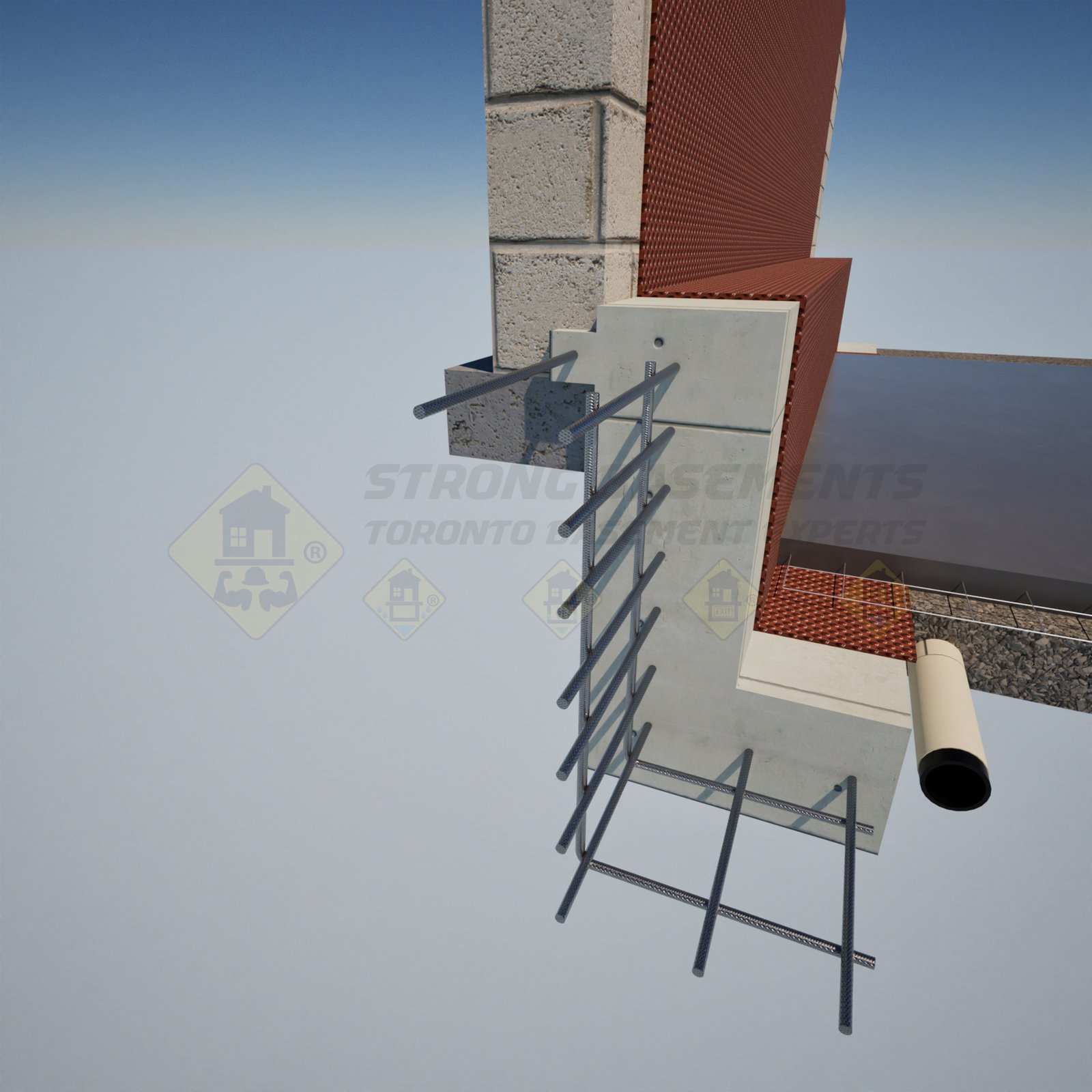
Bench underpinning is used when digging under the existing footing is not allowed or not safe, such as along party walls without neighbour consent or where an adjacent foundation is too close. Instead of supporting the structure from underneath, this method builds a reinforced concrete bench beside the original footing.
A full-width concrete footing is poured beneath the existing foundation, then allowed to cure for 24–48 hours. After curing, a 2–3 inch gap is filled with non-shrink grout to create a solid, long-term bond between the new footing and the original wall. This is one of Toronto’s most reliable underpinning methods for basement lowering.
Underpinning basement with us
- Free Estimates
- Planning & Permitting
- Management & Construction
- Service & Suppor
- Warranty
Do I need a Permit for Flush (L-Shape) Underpinning?
Yes, a building permit is required for basement underpinning in Toronto. Flush Underpinning changes the structural support of your home, so the city requires architectural drawings, structural engineering plans, zoning verification, and scheduled inspections throughout the project. The permit ensures that all excavation and foundation work follows the Ontario Building Code and is safe for both your home and neighbouring properties. At Strong Basements Inc., we work with trusted engineers to prepare all documents and handle the permit process from start to finish, so your basement lowering project moves forward smoothly and compliantly.


IN TECH HOUSE DESIGN (ITHD) is our trusted architectural and engineering partner, which provides homeowners with zoning bylaws, surveys, design, architecture, engineering, and building permits.
Flush (L-Shape) Underpinning FAQ
What is Flush (L-Shape) Underpinning and how does it compare to Overpour or Benching?
Flush underpinning, also called the L-shape method, is a structural technique used in basement lowering when the goal is to keep the new foundation wall perfectly aligned with the original one. The footing is rebuilt in an L-shape: the horizontal section extends under the foundation, and the vertical section rises to meet the existing wall without projecting into the room. This preserves the full interior width of the basement, which is especially important in narrow Toronto homes.
How It Differs From Other Methods?
Overpour Underpinning:
With overpouring, part of the footing is removed and new concrete is poured so it overlaps the wall. This creates a thicker base but leaves a 4–6 inch inward projection along the perimeter. It is a stable and cost-effective method, but that inward “curb” can interfere with framing, insulation, and finished wall lines.
Benching:
Benching is used when digging under the footing is not allowed, such as with shared walls or close neighbouring foundations. Instead of extending the foundation downward, a concrete bench is built inside the basement to hold soil back. While less expensive, it reduces interior floor space by 2 to 3 feet along the perimeter, which lowers the usable width of the room and often reduces renovation flexibility.
Each method is structurally valid, but flush underpinning offers the cleanest interior layout and the best use of space, making it the preferred choice when maximizing square footage is a priority.
How Does Party Wall Underpinning Work if a Neighbour Refuses Consent?
In Toronto’s semi-detached and row houses, the shared Party Wall typically sits on a footing that extends across both properties. To underpin this footing using the flush (L-shape) method, the excavation must go under the full width of the shared foundation. Legally, this means entering the neighbour’s soil, so the City of Toronto usually requires written consent before issuing a permit for work on that wall.
If the neighbour refuses consent, the homeowner cannot proceed with underpinning on the party wall. The City will not approve the excavation, and starting the work without permission can lead to legal action and immediate stop-work orders.
The Practical Alternative: A Hybrid Design
When consent is denied, the project can still move forward by combining methods. Flush underpinning is used on the non-shared walls to gain maximum space. Along the shared party wall, benching is installed instead. The bench acts as a retaining structure that supports the neighbour’s soil without digging underneath their footing. This allows the basement lowering to continue safely and legally, with the only trade-off being a stepped concrete bench along one side of the basement.
This hybrid approach is common in Toronto when party-wall consent cannot be obtained.
How Does the Cost of Flush Underpinning Compare to Other Methods?
Flush (L-Shape) Underpinning is the highest-priced option because it involves detailed excavation, removal of the original footing, installation of steel reinforcement, and custom formwork to match the existing foundation. These steps make it more labour-intensive than other basement-lowering methods.
Typical Toronto Pricing (2024–2025):
Bench Underpinning
$420–$460 per linear foot
Benching is the practical solution used when underpinning is not possible or not permitted, such as along a shared party wall without neighbour consent or where adjacent foundations are too close. Although commonly viewed as a budget-friendly alternative, the work involved can be just as detailed as Flush Underpinning. The bench sections often include the same 15 mm rebar mesh and an L-shape reinforced structure to minimize how far the bench projects into the room. This helps reduce the loss of interior space while still providing a safe and engineered support system for the lowered basement floor.Overpour Underpinning
$350–$390 per linear foot
A mid-range method that removes part of the footing and pours new concrete over the original edge. It uses more concrete but has straightforward forming.Flush (L-Shape) Underpinning
$420–$460+ per linear foot
The most detailed method. Costs increase due to complex excavation, footing removal, rebar installation, and L-shape formwork that must remain flush with the wall.
Return on Investment
Though Flush Underpinning costs more upfront, it often provides the best long-term value. By keeping the walls flush, it preserves full floor area, helps achieve legal ceiling heights, and improves interior layout options. These advantages typically translate into higher resale value and stronger rental potential compared with basements finished using benching or overpour methods.
How Is Waterproofing Managed With Flush (L-Shape) Underpinning?
Waterproofing a flush underpin is more involved because the concrete is poured directly against the soil, and the exterior side of the new wall cannot be accessed afterward. Since exterior membranes cannot be applied in this situation, the waterproofing system is installed from inside the basement.
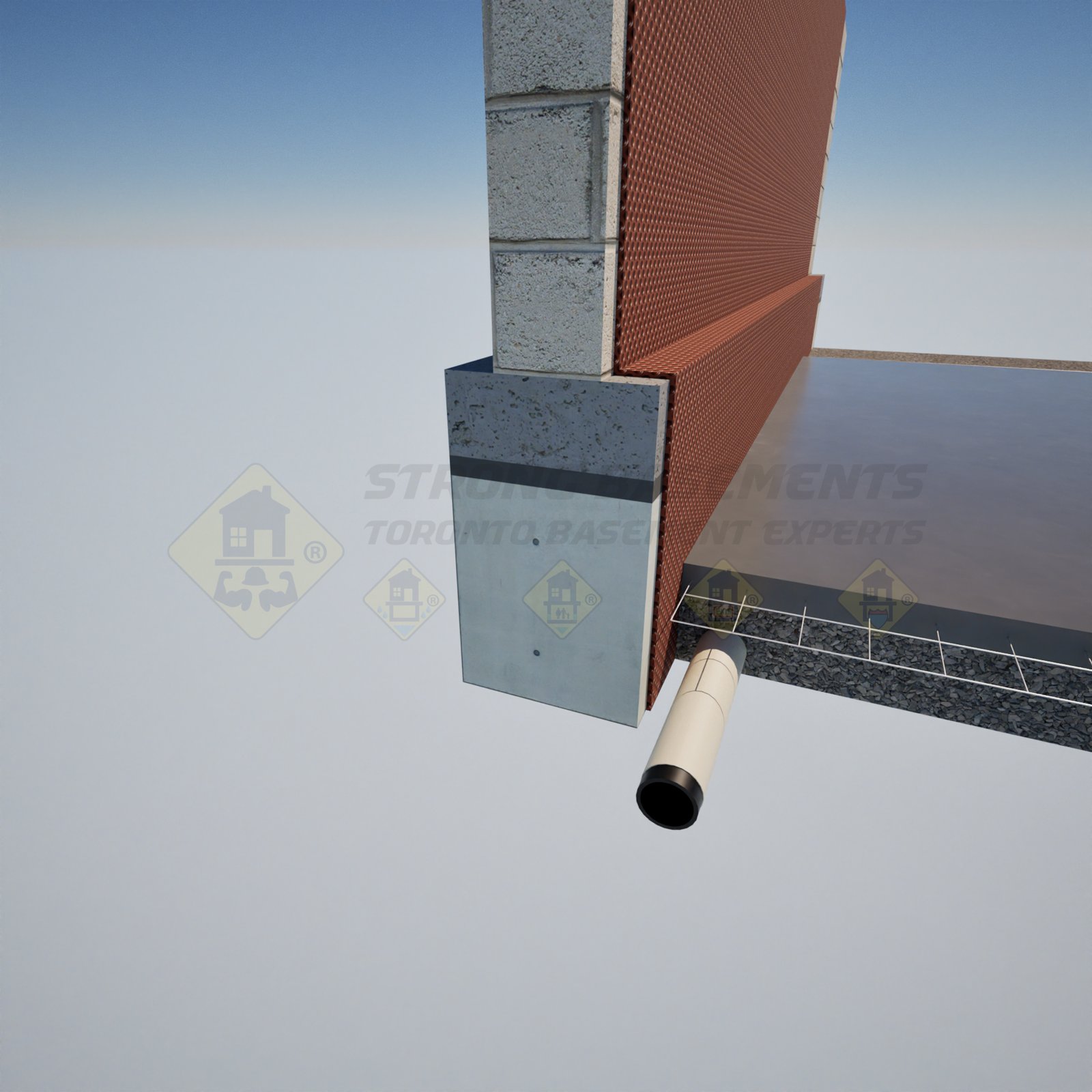
Engineers address this by designing an interior weeping tile system along the perimeter of the underpinned wall. A perforated drain pipe is placed at the base of the footing in a gravel bed, allowing any moisture that reaches the blindside membrane to drain into the weeping tile. From there, the water is directed to a sump pump, which discharges it safely to the storm system. This combination of drainage and mechanical removal ensures long-term water control even when hydrostatic pressure builds behind the foundation.
What Are the Timelines and Permit Requirements?
All underpinning work in Toronto requires a Building Permit, since the process involves excavating below the existing foundation. The city will only approve the work when stamped engineering drawings and safety measures are in place.
Permit Phase (1 – 2 Months)
A licensed structural engineer prepares detailed drawings showing the underpinning sequence, soil bearing requirements, and all reinforcement specifications. This includes calculating the rebar layout, steel bar sizes, and the dimensions of the L-shape (leep) for flush underpinning sections. If zoning is involved, such as adding floor area, the application may include a zoning review. Once submitted, standard House Stream permits are usually approved within 2 – 4 weeks.
Construction Phase (4 – 6 Weeks)
Underpinning is built in controlled stages. Each stage must pass a required inspection before concrete can be poured and curing can begin. Because excavation and concrete work are completed section-by-section, and each pour requires proper curing time, the full structural process generally takes 4 – 6 weeks from start to finish. This timeline includes underpinning, full-depth excavation, drainage installation, waterproofing, and the new concrete slab.
Insurance Requirements
Homeowners must carry a Course of Construction (COC) or “Builder’s Risk” policy during the project, as regular home insurance does not cover structural excavation. Contractors must hold $2M – $5M liability insurance for the permit to remain valid and compliant.
TORONTO LICENSED & CERTIFIED
TORONTO BUILDING RENOVATOR LICENSE: T85-4754041
TORONTO PLUMBING CONTRACTOR LICENSE: T94-4891681
Our Foundation Underpinning Reviews
EXCELLENTTrustindex verifies that the original source of the review is Google. We recently hired Strong Basements for a full basement lowering and underpinning project at our home in Etobicoke, and we couldn’t be happier with the results. Denis and his team were extremely professional, organized, and tidy throughout the entire process. They handled everything from the drawings and building permits to the actual underpinning, waterproofing, installation of a new drain system, and pouring a brand-new concrete floor. The new floor is perfectly level, very smooth, and honestly looks fantastic. Price-wise, they were in the mid-range compared to the other quotes we received, but the quality of their work for that price is outstanding. You really feel like you’re getting top-tier craftsmanship without the premium mark-up. Overall, highly recommend Strong Basements Inc. if you’re looking for reliable, skilled, and professional contractors. Denis and his crew truly delivered.
Owner's reply
Thank you for sharing this detailed review. I truly appreciate that you took the time to describe your experience. Working on your Etobicoke home was a straightforward and well organized project, and I am glad to hear that the entire basement underpinning and lowereing process turned out the way you expected. Basement lowering is never a simple job, and it is encouraging to hear that the results made the effort worthwhile. Your comments about the quality of the concrete finish and the overall value mean a lot to our team. We put a lot of attention into keeping the site clean, staying organized, and making sure each stage is done properly, and it is good to know that this was noticed. Thank you again for trusting Strong Basements Inc. with this project. If you ever need guidance or future work, you are always welcome to reach out.Posted onTrustindex verifies that the original source of the review is Google. This review is long overdue. Strong Basement did waterproofing and repaired a crack in my crawl space last fall. It was really tough work, the crawl space has a very low ceiling, and once the soil was dug out, things didn’t go exactly as planned. Denis and his team adjusted right on the spot, no drama, no extra $$, just elegant solutions. They also kept everything moving with the other subcontractors (scheduling garbage bins, cement trucks, and more), with no delays. His crew was just as impressive: professional, not afraid of hard work, and incredibly fast. Denis (the owner) deserves his own spotlight! He is patient, a true listener, and takes time to explain everything in simple, clear words. He gave me confidence through a very stressful project and showed real care for both the work and the client. They were reliable, hardworking, and professional. Thankyou Denis and the Team. I’m grateful our paths crossed!
Owner's reply
Thank you Inna so much for taking the time to share your experience with our team. We are truly grateful for your kind and detailed words. We well remember your project. Underpinning a foundation to prevent a house from sinking, especially in challenging sandy soil with elevated groundwater, is complex and demanding work. It truly was a tough job, and we sincerely appreciate you highlighting how Denis and the crew adapted on the spot when faced with the unexpected. Our main goal is to navigate those challenges and provide clear, drama-free solutions to give our clients peace of mind through what can be a very stressful process. Hearing that Denis's communication gave you confidence and that you found our crew to be professional and hardworking means a great deal to us. Thank you once again for trusting Strong Basements with such a critical project for your home. It was a pleasure to work with you, and we're so glad our paths crossed! All the best, Denis and the Team at Strong Basements.Posted onTrustindex verifies that the original source of the review is Google. Denis is extremely professional and polite. Everything was done on time and priced fairly. I would highly recommend them to anyone looking for underpinning!
Owner's reply
Thank you, Peter. I appreciate your feedback and your trust in our work. I am glad the project was completed on schedule and to your expectations. Your recommendation means a lot to us.Posted onTrustindex verifies that the original source of the review is Google. Reliable and professional. I called for an estimate and Dennis scheduled and confirmed our appointment. He gave a thorough and professionally sound assessment of our issue, luckily we didn't need any work done but I would definitely trust him with the job if there was.
Owner's reply
Thank you Mimi, for sharing your experience! We're glad Denis could provide a thorough and professional assessment for you. Even though no work was necessary this time, we appreciate your trust in us and look forward to potentially assisting you in the future. Your confidence in our reliability and professionalism is greatly valued!Posted onTrustindex verifies that the original source of the review is Google. Just wrapped up another project with Strong Basements, focusing on basement underpinning and installing an insulated concrete floor this time. Living in Etobicoke, I’ve seen my share of home improvement projects, but the professionalism and quality of work from these guys stand out. From the beginning, Denis was incredibly helpful, providing a detailed and transparent estimate that offered great value for the money. Despite the complexity of the work, especially with the underpinning, his team managed to keep everything on track. We did encounter a couple of hitches along the way due to the nature of our home's foundation, but the way Denis and his crew handled these issues was impressive. They ensured that all solutions were thoroughly explained and executed with precision. Big thanks to Denis and everyone at Strong Basements Inc. for their dedication and for turning what could have been a stressful process into a smooth and satisfying experience. Highly recommend their services if you're looking to upgrade your basement with a team that goes above and beyond.
Owner's reply
Thank you, Matheus, for your wonderful review! We're delighted to hear about your positive experience with our basement underpinning and insulated concrete floor installation in Etobicoke. Your acknowledgment of Denis's helpfulness and our team's professionalism means a lot to us. We appreciate your recommendation and are glad we could make your project smooth and satisfactory. Looking forward to serving you again!Posted onTrustindex verifies that the original source of the review is Google. Working with Strong Basements for my Etobicoke home's basement concrete flooring was the right decision. Not only was their team highly professional and detail-oriented, but the pricing was also very competitive compared to other quotes I received. The quality of work is truly outstanding, with a strong focus on customer relationships. Denis provided a clear, thorough consultation, walking me through every step of the process. I'm impressed by the durability and finish of the concrete floor. For anyone in Toronto looking for high-quality concrete basement flooring at a great price, I highly recommend Strong Basements.
Owner's reply
Dear Anastasia Mazanova, Thank you for your wonderful review and for choosing Strong Basements for your Etobicoke home's basement concrete flooring project. We're delighted to hear that you found our team to be highly professional, detail-oriented, and competitively priced. At Strong Basements, we strive to deliver not just outstanding work quality but also to foster strong customer relationships by providing clear, thorough consultations and understanding each client's unique needs. Denis and the rest of our team are thrilled to know that you are satisfied with the durability and finish of your concrete floor. It's our goal to ensure every project we undertake meets our high standards for quality and customer satisfaction. We're grateful for your recommendation to others in Toronto seeking high-quality concrete basement flooring. Should you or anyone you know require our services in the future, please don't hesitate to reach out. Thank you again for your trust in Strong Basements, and we look forward to the opportunity to serve you again. Best regards, Strong Basements' Team.Posted onTrustindex verifies that the original source of the review is Google. Wife had called a few companies and most of them struggled with setting up a visit for a quote. Strong Basements was very punctual, responsive and helpful in our first meeting. Denis walked us through what was required and put us in touch with all the personnel required. Job ran long, as most renovations do, but his team was more than equipped for the task. He was able to solve any problems that arose. Renovations are never easy, for the customer or the contractor but Denis was very hardworking and open about the process. Would definitely recommend to anyone else look to underpin or waterproof.
Owner's reply
Dear Tony Huang, Thank you for your thoughtful review and for choosing Strong Basements for your underpinning and waterproofing needs. We're delighted to hear about your positive experience with Denis and our team. Punctuality, responsiveness, and thorough communication are pillars of our service, and it's rewarding to know these aspects stood out to you and your wife. We understand that renovations can extend beyond expected timelines, and we appreciate your patience and understanding as we navigated through the challenges that arose. Our team is committed to finding effective solutions and ensuring the job is done right, even when unforeseen issues come up. Hearing that you would recommend our services means the world to us. We're here for you and anyone in your network who may need assistance with basement underpinning or waterproofing projects in the future. Your trust and support motivate us to continue delivering high-quality work and maintaining open lines of communication with our clients. If there's anything more we can do for you, or if you have any further projects in mind, please don't hesitate to get in touch. Warmest regards, Strong Basements' team.Posted onTrustindex verifies that the original source of the review is Google. Good basement waterproofing contractors. High quality work and materials, professional and polite employees. I satisfied with the price and service approach i have got from this company. The reason of the four star rating is that it took them one day longer to complete the job then it was promised. But anyways I definitely will recommend strong basements to anyone with basement waterproofing problems.
Owner's reply
Dear Mark Oliver, Thank you for taking the time to share your feedback about our basement waterproofing services. We're thrilled to hear you appreciated the quality of our work and the professionalism of our team. It's always our goal to provide top-notch services at a fair price, and we're glad that resonated with you. We understand that the project took a day longer than anticipated, and we sincerely apologize for any inconvenience this may have caused. Timeliness is crucial in our line of work, and we're constantly looking for ways to improve our efficiency without compromising on quality. Your feedback is invaluable in that process. We're honored that you would recommend Strong Basements to others facing basement waterproofing issues. If you or anyone you know needs further assistance, please don't hesitate to reach out. We look forward to serving you again in the future! Best regards, Strong Basements' team.Posted onTrustindex verifies that the original source of the review is Google. Good guys do the good job. I have got basement waterproofing done in my place by Strong Basements. It was a massive water leak in my basement. Now it is dry for a year, with no signs of water. Thanks.
Owner's reply
Dear Ashley Malcovich, Thank you for your wonderful review and for choosing [Your Business Name] for your basement waterproofing needs. We're thrilled to hear that our team effectively addressed the massive water leak in your basement, ensuring it's been dry for a year with no signs of water. Our commitment is to provide top-quality waterproofing solutions that deliver lasting results, and your feedback reaffirms the hard work we put in every day. We're here for any future needs or to assist anyone you know who may benefit from our services. Thanks again for trusting us with your home! Best regards, Strong Basements' Team.