Basement Underpinning Cost Toronto (2026) + Calculator

A Detailed Price Breakdown
Contents
How much does it cost to Underpin a basement in Toronto?
Wondering how much basement underpinning costs in Toronto? On average, homeowners can expect to pay $350 – $480 per linear foot of underpinning or around $80 – $100 per square foot for basement lowering projects. Costs vary based on soil conditions, depth of lowering, foundation underpinning method (Non-Shrink, Overpour, L-Shape, Bench Footing, Engineered Bench), structural requirements (load posts and beams), and waterproofing needs. At Strong Basements, we provide transparent pricing, engineering-approved solutions, and full compliance with Ontario Building Codes to ensure your home’s foundation is safe, durable, and cost-effective.
As a complex project, underpinning represents a significant financial investment. This guide provides a transparent and detailed breakdown of all associated costs in Toronto to help homeowners plan with confidence. We will examine industry averages, the seven key factors that influence final pricing, sample project quotes, and practical advice for planning and financing your renovation.
| Method | Best For | Cost per LF | Space Loss | Party Wall Neighbour Consent? |
|---|---|---|---|---|
| Party Walls (No Consent) | $300+ | 24″ | Not Required | |
| Budget & Speed | $350+ | 4″ | Required | |
| Older/Fragile Homes | $380+ | 4″ | Required | |
| Maximizing Space | $420+ | 0″ | Required | |
| Party Walls (No Consent) | $420+ | 12″ | Not Required |
Underpinning Methods Comparison Price Table - 2' FEET DEEP
Basement Lowering / Underpinning Cost Calculator
Basement Lowering / Underpinning Industry Average Costs in Toronto 2026
Homeowners often anchor their expectations to a per-linear-foot price found online, leading to a “sticker shock” moment later. A simple calculation of 100 linear feet, going 2 feet down, at $350 per foot suggests a budget of $35,000. However, this figure rarely includes the mandatory associated costs. When professional fees for engineering plans and on-site inspections ($6,600), city permits ($1,000), new plumbing and drainage systems including a backwater valve and sump pump ($6,400), a new concrete floor ($9,000), and a comprehensive waterproofing system ($3,000) are factored in, the true cost to achieve a usable, unfinished “shell” is actually $62,900 (approx. $105 per square foot). A transparent and trustworthy contractor will always provide a quote that clearly separates the cost of the structural underpinning from these other essential project components.

| Service Type | Unit | Price per unit | Units for 600 sq ft basement |
|---|---|---|---|
| Project | $4,500 | 1 | |
| City of Toronto building permit | Project | $1,000 | 1 |
| Underpinning and Excavation (2 feet deep) | Linear Foot | $350 | 100 |
| Each | $1,900 | 1 | |
| Engineer’s on-site inspections | Report | $700 | 3 |
| Linear Foot | $30 | 100 | |
| Each | $1,900 | 1 | |
| New sanitary drain installation | Rough-In | $500 | 6 |
| Each | $1,500 | 1 | |
| Sewage ejector system (if required) | Each | $3,500 | n/a |
| New water service line | 3/4″ Copper | $2,000 | n/a |
| Square Foot | $15 | 600 | |
| Square Foot | $104.9 | Total Price: $62,900 |
Prices: Linear Foot vs. Square Foot
What's the Per-Linear-Foot Cost?
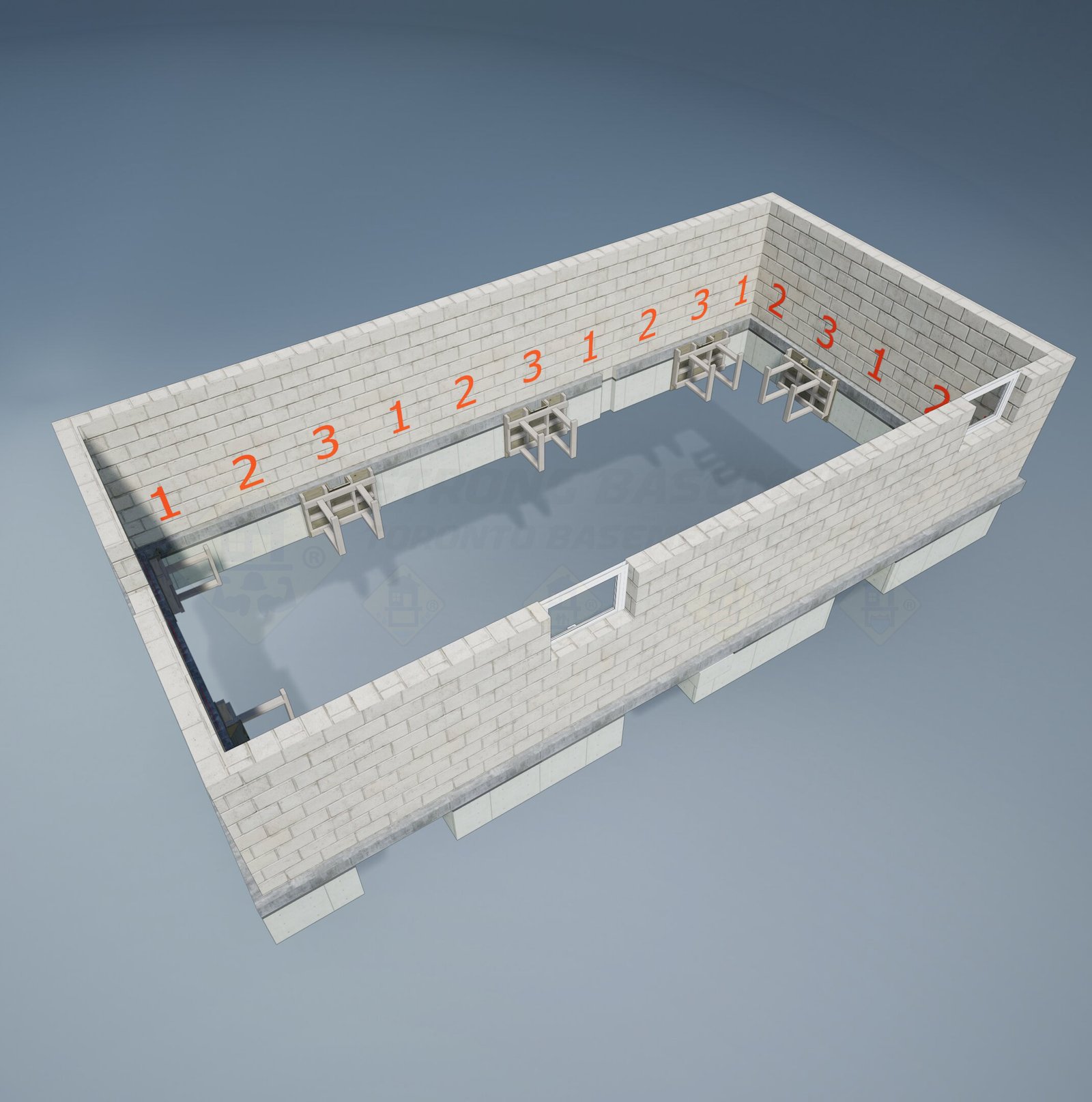
The industry standard for pricing the core structural phase (excavation and foundation underpinning) of a basement lowering project is the cost per linear foot. For a professionally managed, fully insured project in Toronto, the 2025 market rate typically ranges from $350 to over $600 per linear foot (with crawlspaces often at the higher end).
It is important to understand exactly what this rate buys you. This price specifically covers the sequential excavation (the mandatory “1-2-3” safety staging), the installation of the underpinning concrete footings, and the full excavation of the soil from the center of the basement. It generally does not include plumbing, waterproofing, structural improvements like load posts and beams, or concrete floors. Consequently, the per-linear-foot rate often represents only a fraction of the total project cost, as finishing the space and upgrading mechanical systems can essentially double the investment required for the structural shell alone.
A “linear foot” is simply a one-foot measurement along the perimeter of the foundation walls that requires lowering. For instance, a 20′ by 30′ home (600 sq. ft.) has a total perimeter of 100 linear feet. If you underpin the entire foundation, you would use that 100-foot measurement as the base multiplier for your structural costs. While you may see online estimates as low as $80 per linear foot, these figures are often outdated, refer to cheaper methods like benching, or exclude the massive labor cost of excavating the actual living space.
What's the Per-Square-Foot Cost?
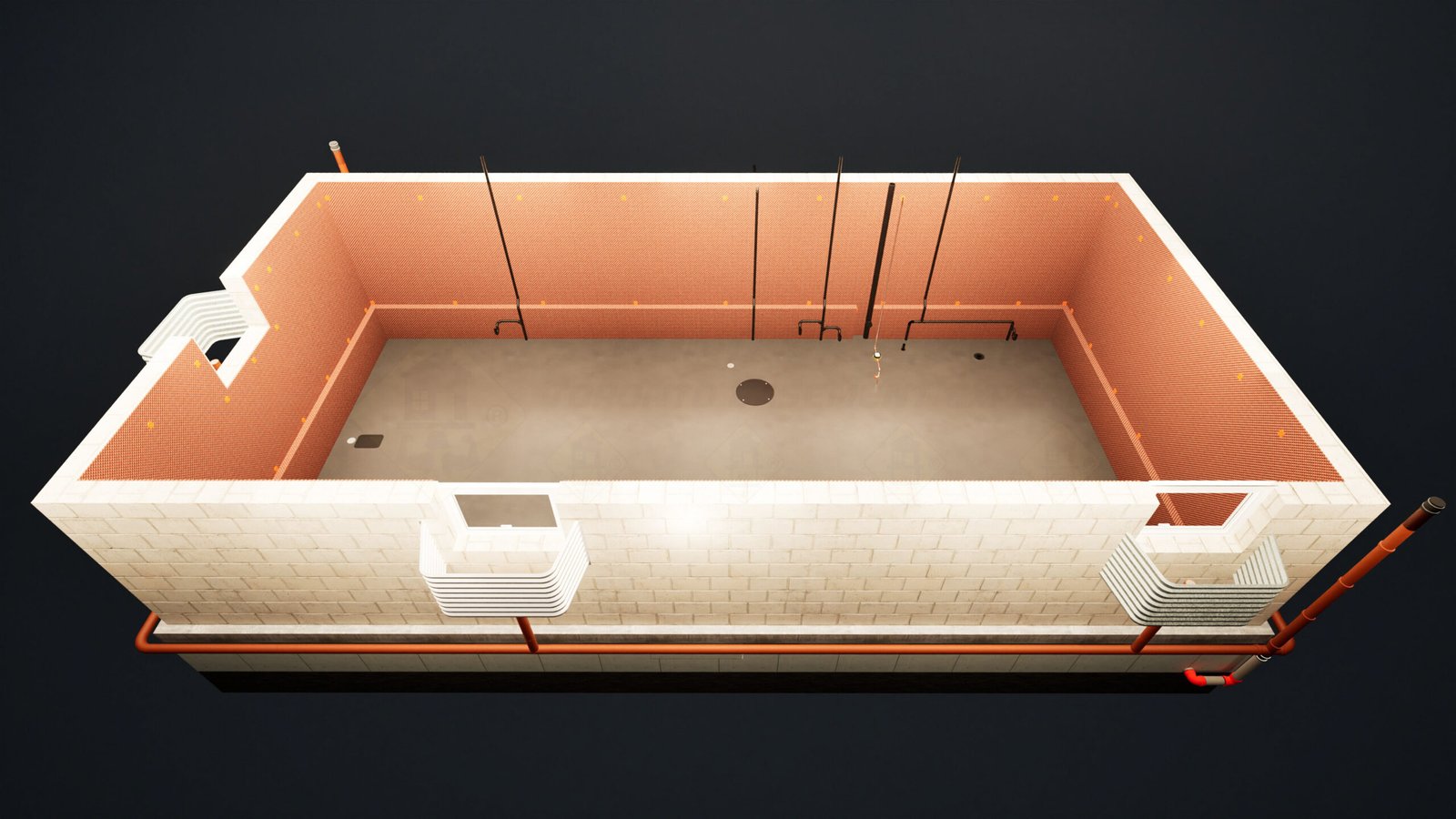
In contrast to the structural-only focus of linear foot pricing, the per-square-foot cost captures the full scope of the project. This metric is calculated by taking the combined cost of the entire complex of services like excavation, underpinning, waterproofing, structural upgrades, drain installation, and the new concrete floor, and dividing it by the basement’s total floor area.
For example, a comprehensive project costing $62,900 for a 600-square-foot basement results in a rate of approximately $105 per square foot. Unlike the base structural rate, this figure represents the complete basement lowering price, providing a realistic budget for a fully upgraded foundation that is ready for interior finishing.

7 Factors Determine Final Underpinning Cost
The wide cost ranges exist because every Toronto home and every underpinning project is unique. A precise, fixed-price quote can only be developed after a thorough assessment of seven critical variables.
Engineering & Permit Fees
Basement underpinning is a major structural alteration and is not a project that can be done without official oversight. It legally requires two key components: professional engineering drawings and a City of Toronto building permit.
Engineering Fees: A licensed structural engineer must assess the property, determine the appropriate underpinning design based on the home’s structure and soil conditions, and produce a detailed set of drawings for the permit application and construction. In Toronto, the cost for this crucial service typically ranges from $2,000 to $5,000. Some design-build firms may include this service as part of a comprehensive project package.
Permit Fees: While contractors often quote a “permit fee” of $2,000 to $3,000, it’s important to understand what this covers. The actual fee paid directly to the City of Toronto for an underpinning permit is relatively small. Effective January 1, 2025, the rate is $11.89 per linear metre of underpinning, plus a minimum fee of $206.53. For a 100-linear-foot (approx. 30.5 metres) project, the city’s fee would be under $400. The larger cost quoted by a contractor reflects the significant administrative work involved: preparing and submitting the detailed application, managing communication with the city’s plan examiners, and responding to any revisions or requests for more information, all of which rely on the expensive engineering drawings. The value of having an experienced contractor manage this process is the avoidance of costly delays and bureaucratic headaches.
Site Access
This factor is a critical component of site logistics and directly impacts labour costs. The central question is: how will workers, machinery, and tonnes of excavated soil be moved in and out of the basement? The answer depends on the property type:
Detached Home with Driveway: This is the ideal scenario. It often allows for the use of mini-excavators for digging and conveyor belt systems to transport soil directly from the basement to a disposal bin in the driveway. This mechanisation saves time and reduces labour costs.
Semi-Detached or Row House: This is the most common and challenging scenario in Toronto. With access often limited to a narrow gangway or through the main floor of the house, the entire process must be done manually. This involves a crew of workers with shovels and wheelbarrows, which is labour-intensive and therefore more expensive.
Laneway Access: A property with a rear laneway can be advantageous if the lane is wide enough to accommodate a disposal bin and small equipment, providing a second access point that avoids disruption to the front of the house.
A thorough on-site assessment is essential to plan these logistics, as they are a major factor in determining the labour portion of the final quote.
Soil Conditions
The geological conditions underneath a house and the ease of access to the property are two of the biggest “wildcard” factors in an underpinning budget.
Toronto’s Soil: The city’s geology is a diverse and challenging mix of clay, sand, glacial deposits, and limestone bedrock. Many older neighbourhoods like Cabbagetown and those in North York are situated on heavy clay soil, which expands when wet and shrinks when dry. This “active” soil requires careful water management and engineering to prevent future foundation movement. Conversely, properties closer to the lake, particularly in areas of Etobicoke and the waterfront, may be built on unstable lakefill. This fill can be composed of unsorted construction debris and may even be contaminated from historical industrial activity. Encountering hard rock, a high water table, or loose, sandy soil will also add complexity and cost to the excavation process.
These factors have a cascading effect on the project budget. Unstable or unknown soil may necessitate a formal geotechnical report from a specialized engineer. The structural engineer will then use this report to design a more robust and more expensive foundation system. Most critically, the Ontario government has strict regulations for the management and disposal of excess soil. If soil is found to be contaminated, it must be transported to a specialized licensed facility, a process that can add thousands of dollars to the project’s disposal costs. A trustworthy contractor will discuss the potential for these soil-related costs upfront, based on the known conditions of the neighbourhood.
Linear Feet of Walls
This is the most fundamental cost driver. The total length of the foundation walls that must be underpinned is the primary multiplier for the per-linear-foot rate. A larger home with a greater perimeter will require more labour, more materials (concrete and steel), and more time, thus increasing the cost. Homeowners can get a rough estimate by measuring the exterior perimeter of their house.
However, a professional assessment must also identify if any interior load-bearing walls are built on the home’s foundation. In some older Toronto houses, these central walls also need to be underpinned to lower the entire basement floor uniformly, which adds to the total linear footage and overall cost. This is a crucial detail often overlooked in online calculators and preliminary estimates.
Target Dig-Down Depth
The cost of underpinning is not just a function of length, but also of depth. The deeper the excavation, the higher the cost per linear foot. A typical goal is to achieve a finished ceiling height of 8 feet, which is a comfortable and valuable standard. Digging deeper to achieve 9 or 10-foot ceilings is possible, but will significantly increase the project budget.
The cost does not increase linearly with depth. Excavating an additional foot, for example, from 2 feet to 3 feet, can be substantially more expensive than the first 2 feet. This is because deeper excavations increase the lateral pressure from the surrounding soil, potentially requiring more robust shoring and more complex engineering solutions to ensure safety and stability. It also dramatically increases the volume of soil that must be manually removed from the basement and the volume of concrete that must be brought in. Furthermore, a deeper dig might push the new foundation into a different soil layer or closer to the water table, triggering more advanced and costly engineering designs.
It is important to note that the Ontario Building Code specifies minimum ceiling heights for habitable spaces, which is typically around 6 feet 11 inches for a finished legal basement, although this can vary. Homeowners should communicate their desired finished ceiling height to their contractor, who will then calculate the necessary dig-down depth, taking into account the thickness of the new concrete slab, vapour barrier, subfloor, and final flooring material.
Structural Upgrades
Structural upgrades are essential modifications required to support your home’s new layout and meet modern safety codes during the basement lowering process. These upgrades go beyond the standard foundation work and often include the replacement of old support columns with new steel load-bearing posts (typically $1,900 each on a new concrete footing) or the installation of recessed load-bearing beams to create an open-concept flow without obstructive pillars. Other common upgrades include foundation wall demolition to merge rooms, cutting new foundation wall openings for walkouts, or installing egress windows to ensure legal fire escape routes for bedrooms. Because these elements are dictated by your specific engineering design and load calculations, costs for beams and large openings vary by project complexity.
Plumbing & Drains Relocation
When the basement floor is excavated and lowered, all of the plumbing infrastructure currently buried beneath the concrete slab must be removed and reinstalled at the new, lower depth. This is a significant and mandatory part of the project. The cost for this work can vary widely but typically ranges from $3,000 to over $10,000, depending on the complexity and scope. Key components include:
Main Drain Replacement: Many older Toronto homes have original clay sewer pipes that are prone to cracking and root intrusion. The underpinning process requires their removal, providing the perfect opportunity to replace them with modern PVC pipes.
Interior Weeping Tile System: A new perforated drainpipe installed around the interior perimeter of the new footings is essential to collect water and prevent hydrostatic pressure. This system is a cornerstone of modern basement waterproofing, with costs ranging from $3,000 to $6,000, depending on the linear footage of foundation walls.
Sump Pump Installation: The weeping tile system directs water to a sump pit, where a sump pump actively ejects it away from the foundation. A professional installation typically costs between $1,900 and $2,500.
Backwater Valve Installation: This device prevents city sewer backups from flowing into the basement. It is a crucial protective measure, and installing one while the floor is open is highly strategic. Costs range from $1,500 (interior) to $2,500 (exterior), and the City of Toronto often offers a Basement Flooding Protection Subsidy Program that can rebate a significant portion of this cost.
Main Water Supply Pipe Upgrade and Relocation: Replacing the incoming water service line is critical for improving water pressure and removing potential contaminants found in older lead or galvanized pipes. The project allows for upgrading to a standard 3/4-inch copper line and relocating the entry point if necessary to suit the new floor plan. This upgrade typically costs approximately $2,000.
The demolition of the basement floor provides a unique, cost-effective window to overhaul the home’s entire underground plumbing and waterproofing infrastructure. Performing these upgrades at a later date would require demolishing the brand-new concrete floor, incurring immense additional expense and disruption. A professional contractor will present these upgrades not as an ancillary cost, but as a long-term investment in protecting the newly created space.
Cost Scenarios of Underpinning in Toronto Neighbourhood
To bring these numbers to life, the following section presents three detailed sample quotes for common Toronto housing types. These estimates illustrate how the seven key factors combine to create a real-world budget. Please note: These are for illustrative purposes only. Every project requires a custom on-site assessment for a precise, fixed-price quote.
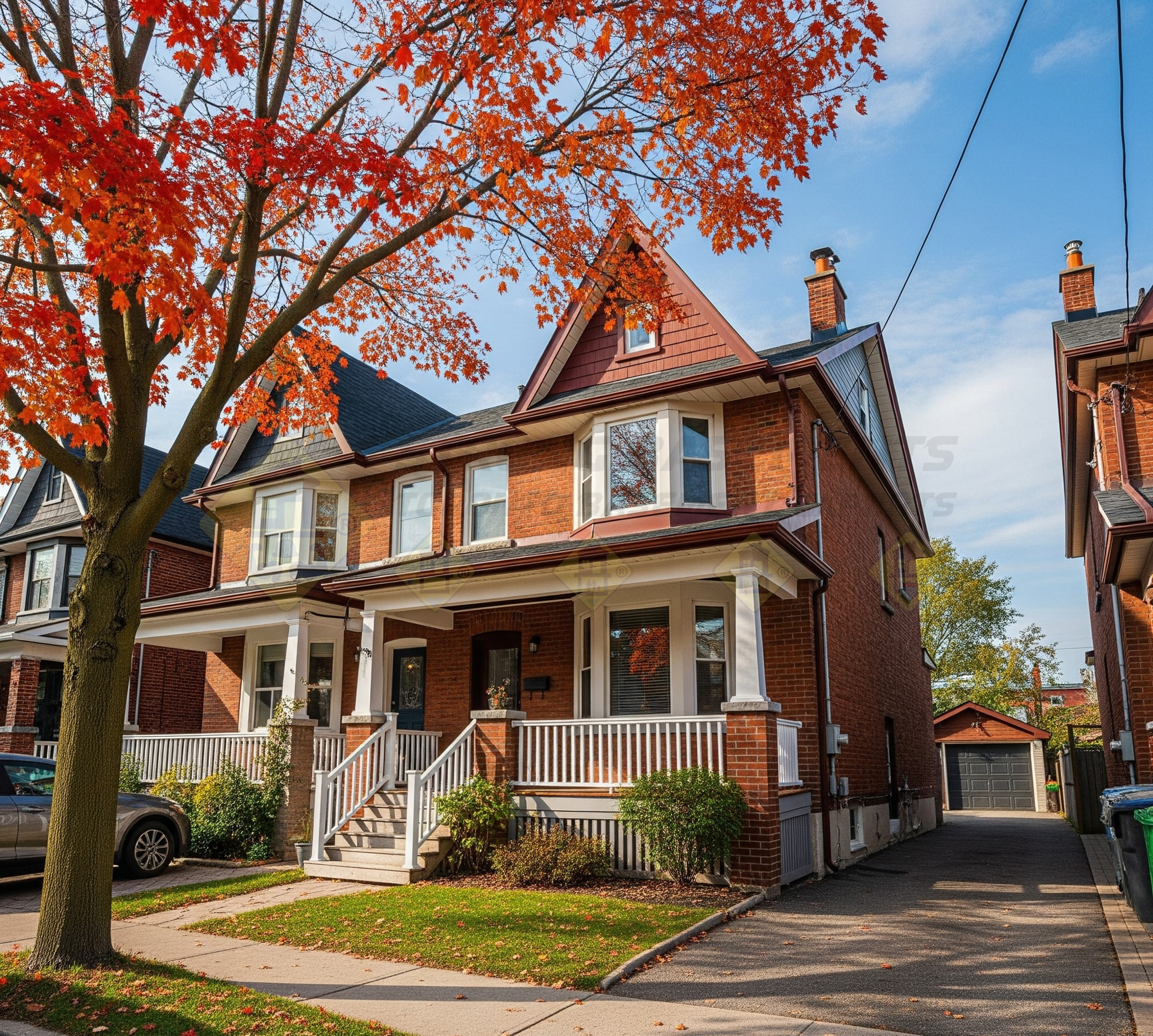
Toronto Semi-Detached (Annex or East York)
These classic Toronto homes present a common set of challenges and requirements.
Assumptions:
Dimensions: 17.5 feet wide x 45 feet deep (approx. 787 sq. ft. basement).
Linear Feet: 107.5 LF to be underpinned (front, back, and one exterior side wall; the other is a shared party wall).
Dig-Down: 2 feet to achieve an 8-foot finished ceiling height.
Challenges: Narrow side yard limits access, requiring manual excavation and soil removal. Standard clay soil conditions.
| Sample Quote: Toronto Semi-Detached | Estimated Cost | Details | |
|---|---|---|---|
| Structural Underpinning | $51,063 | 107.5 LF @ $475/LF. Rate reflects increased manual labour due to limited access. | |
| Engineering & Permit Management | $5,500 | Includes structural drawings, reports, and all city application processing. | |
| Interior Waterproofing & Sump Pump | $5,125 | Full perimeter membrane and weeping tile system connected to a new sump pump and pit. | |
| Drain Replacement & Backwater Valve | $4,500 | Replacement of main drain under slab, 4 rough-ins, and installation of a backwater valve. | |
| New Concrete Slab (4-inch) | $11,805 | For 787 sq. ft. area, includes gravel base and vapour barrier. | |
| Sub-Total (Unfinished Shell) | $77,993 | ||
| Estimated HST (13%) | $10,139 | ||
| Estimated Grand Total | $88,132 | ||
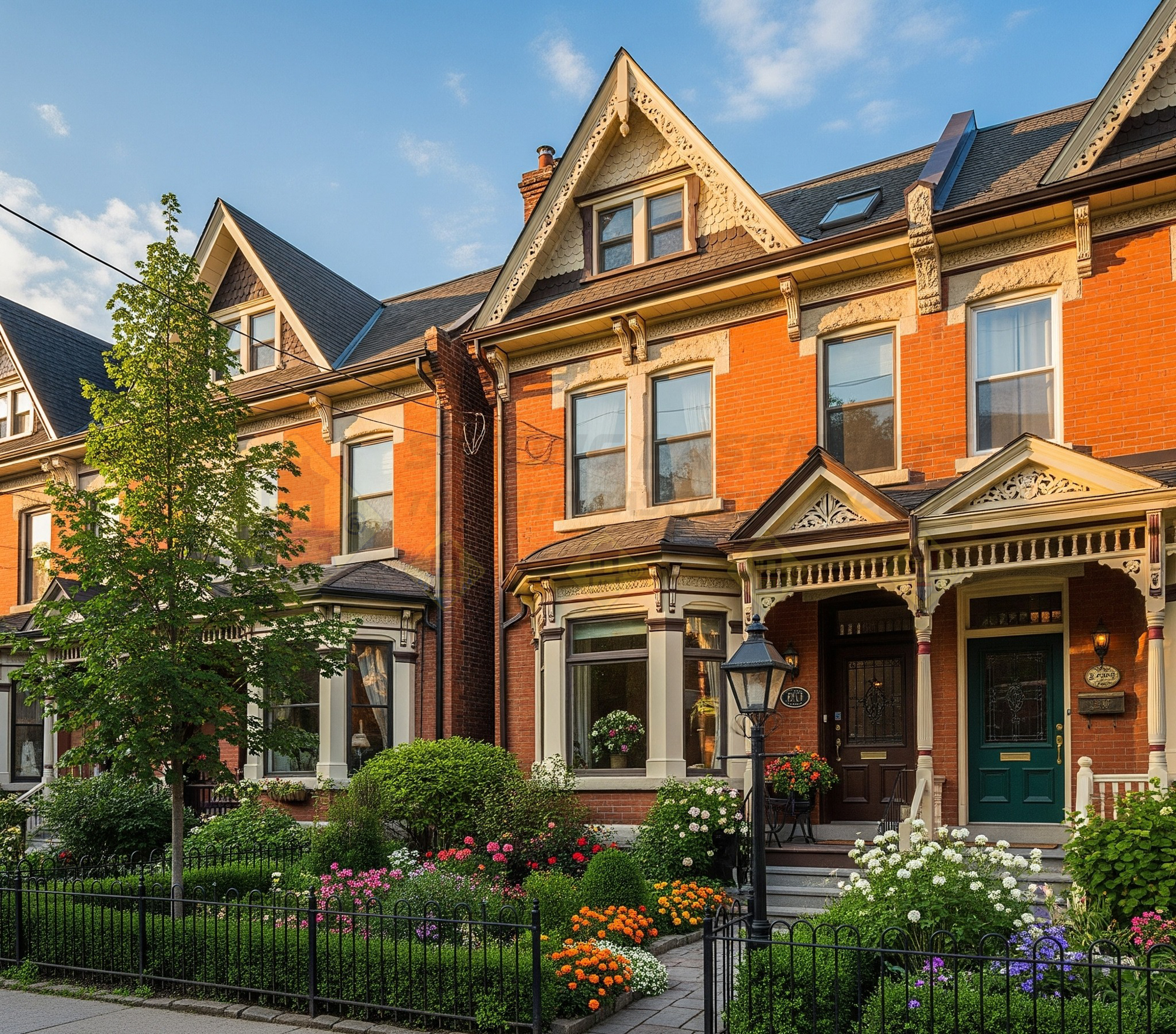
Cabbagetown Victorian Row House
Cabbagetown is known for its historic Victorian homes, which come with unique structural characteristics.
Assumptions:
Dimensions: Narrow 20 feet wide x 55 feet deep (approx. 1100 sq. ft. basement).
Linear Feet: 130 LF to be underpinned (front, back, and one exterior side wall).
Dig-Down: 2.5 feet to clear old footings and achieve 8-foot ceilings.
Challenges: Extremely limited access (through the front door only); older, delicate rubble or brick foundation requiring more careful, slower work; potentially challenging clay/shale soil common to the area.
| Sample Quote: Toronto Semi-Detached | Estimated Cost | Details | |
|---|---|---|---|
| Structural Underpinning | $71,500 | 130 LF @ $550/LF. Higher rate reflects difficult access, deeper dig, and delicate foundation type. | |
| Engineering & Permit Management | $6,000 | More complex engineering required for older foundation type. | |
| Interior Waterproofing & Sump Pump | $5,800 | Full perimeter membrane and weeping tile system connected to a new sump pump and pit. | |
| Drain Replacement & Backwater Valve | $4,500 | Replacement of main drain under slab and installation of a backwater valve. | |
| New Concrete Slab (4-inch) | $16,500 | For 1100 sq. ft. area, includes gravel base and vapour barrier. | |
| Sub-Total (Unfinished Shell) | $104,300 | ||
| Estimated HST (13%) | $13,559 | ||
| Estimated Grand Total | $117,859 | ||
Etobicoke Post-War Bungalow
These often sprawling, single-story homes offer great potential but can have their own set of subsurface issues.
Assumptions:
Dimensions: 50 feet wide x 30 feet deep (approx. 1500 sq. ft. basement).
Linear Feet: 160 LF to be underpinned (full perimeter).
Dig-Down: 2 feet to achieve an 8-foot ceiling height.
Challenges: Excellent access due to larger lot size, but a higher potential for poor soil quality or contamination from historical lakefill, requiring testing. A larger footprint increases material quantities.

| Sample Quote: Toronto Semi-Detached | Estimated Cost | Details | |
|---|---|---|---|
| Structural Underpinning | $68,000 | 160 LF @ $425/LF. Lower rate reflects excellent machine access. | |
| Engineering & Permit Management | $5,000 | Standard engineering requirements. | |
| Interior Waterproofing & Sump Pump | $6,700 | Full perimeter membrane and weeping tile system connected to a new sump pump and pit. | |
| Drain Replacement & Backwater Valve | $4,500 | Replacement of main drain under slab and installation of a backwater valve. | |
| New Concrete Slab (4-inch) | $22,500 | For 1500 sq. ft. area, includes gravel base and vapour barrier. | |
| Sub-Total (Unfinished Shell) | $106,700 | ||
| Estimated HST (13%) | $13,871 | ||
| Estimated Grand Total | $120,571 | ||

Planning Your Project: Timeline, Investment, and Financing
A successful underpinning project requires careful planning that extends beyond the construction itself.
Project Timeline
While every project is different, a typical full-basement underpinning in Toronto takes approximately 6 to 10 weeks from the start of construction to the final concrete pour. This timeline is broken into several distinct phases:
Consultation & Design (1-2 Days): Initial meetings, site assessment, and development of the project scope.
Engineering & Permitting (2-4 weeks): The structural engineer creates the drawings, and the permit application is submitted to the city for review and approval. This phase often runs concurrently with the final design.
Demolition & Excavation (1-2 weeks): The existing concrete slab is broken up and removed, and the soil is excavated to the target depth. This is the most labour-intensive phase.
Underpinning & Concrete (2-3 weeks): The new footings are poured in sequential sections, followed by the pouring of the new basement floor.
Systems Installation (1 week): The new plumbing, drains, and sump pump are installed and connected.
The Investment Case
While the upfront cost is significant, basement underpinning is one of the most effective ways to add substantial square footage and value to a Toronto home. It is often considerably more cost-effective than building a new home addition. Some estimates suggest that underpinning can achieve a similar increase in living space for as little as one-eighth the cost of a traditional addition, making it a powerful financial investment in the city’s competitive real estate market.
Financing Your Project
Given the substantial cost, many homeowners explore financing options. While it is always recommended to consult with a financial advisor, common routes include:
-
Home Equity Line of Credit (HELOC): A revolving line of credit secured against the property’s equity.
-
Mortgage Refinancing: Refinancing the existing mortgage to access equity and fund the renovation.
-
Contractor Financing: Many reputable contractors partner with financial institutions to offer project-specific loans, often with flexible terms and convenient application processes.
-
CMHC Refinance Program: For homeowners planning to create a legal secondary suite, the Canada Mortgage and Housing Corporation (CMHC) offers a specific refinance product. This program allows homeowners to access insured financing specifically for the costs associated with constructing a self-contained rental unit, which aligns perfectly with a key motivation for many underpinning projects.
Frequently Asked Questions (FAQ)
How much does basement underpinning cost in Toronto?
In 2026, the industry average for the structural work alone ranges from $350 to $480 per linear foot. However, for a complete project (which includes engineering, permits, waterproofing, new plumbing, and a concrete floor), the cost typically falls between $80 and $100 per square foot.
Example Project: A typical 600-square-foot basement lowering project costs approximately $62,900 (or ~$105/sq. ft.) when you include all mandatory systems like drains and sump pumps.
What factors affect basement underpinning cost?
The guide identifies 7 key factors that determine your final quote:
Linear Feet of Walls: The total length of the foundation is the primary cost multiplier.
Dig-Down Depth: Going deeper (e.g., from 8ft to 9ft) increases costs exponentially due to higher soil pressure and labor.
Soil Conditions: Clay, sand, or contaminated soil can significantly increase disposal and engineering costs.
Site Access: A detached home with a driveway allows for machinery, whereas a row house (where soil must be wheelbarrowed out) costs more.
Disposal Fees: Strict Ontario regulations on excess soil can add thousands if contamination is found.
Engineering & Permits: Mandatory fees for drawings and city approvals.
Waterproofing & Plumbing: New weeping tiles, sump pumps, and drain replacements are standard additions.
Are permits required for basement underpinning in Toronto, and how much do they cost?
Yes, permits are mandatory. It is a major structural alteration that requires both professional engineering drawings and a City of Toronto building permit.
City Fees: As of January 1, 2025, the direct city fee is $11.89 per linear metre plus a minimum fee of $206.53 (typically totaling under $400 for a standard home).
Engineering Fees: A licensed structural engineer typically charges $2,000 to $5,000 for the required drawings.
Visit this article to learn more about Requirements for Basement Lowering & Underpinning in Toronto – 2026
What is included in a typical basement underpinning quote?
A transparent “turnkey” quote should separate structural work from other essentials. A complete package typically includes:
Structural Phase: Demolition of the old slab, sequential “1-2-3” excavation, rebar, and new concrete footings.
Basement Systems: New underground drains, interior weeping tile, sump pump, backwater valve, and gravel base.
Concrete Floor: Pouring the new concrete slab.
Note: Interior finishing (drywall, flooring, paint) is a separate phase and is usually NOT included in the base underpinning quote.
How long does a basement underpinning project usually take in Toronto?
A typical full-basement underpinning project takes approximately 6 to 10 weeks from the start of construction to the final concrete pour.
Breakdown: Demolition & Excavation (1-2 weeks), Underpinning & Concrete (2-3 weeks), Systems Installation (1 week).
Is basement underpinning in Toronto a good investment?
Yes. The guide states it is one of the most effective ways to add substantial value and square footage. Underpinning can achieve a similar increase in living space for as little as one-eighth the cost of a traditional home addition. It effectively converts low-value storage space into high-value livable square footage (like a rental suite or family room).
How can homeowners reduce the cost of basement underpinning in Toronto?
Based on the guide, there are a few strategic ways to manage or lower costs:
Choose “Benching” Instead: If you can sacrifice some floor space, the Regular Bench method costs $300+ per linear foot (vs. $350-$480 for underpinning) and avoids the need for neighbor consent on party walls.
Limit Dig Depth: Sticking to a standard 8-foot ceiling height rather than digging deeper (9-10 feet) keeps structural and soil disposal costs lower.
Access Financing: While not a direct cost reduction, utilizing programs like the CMHC Refinance Program (for legal suites) or a HELOC can make the project financially viable.
Can I do basement underpinning myself?
It is strongly advised against attempting to DIY a basement underpinning project. It is a highly complex structural process that, if done incorrectly, can lead to the catastrophic failure of the home’s foundation. It legally requires stamped drawings from a structural engineer, a city permit, and multiple inspections. The work demands specialized knowledge, experience, and equipment that is beyond the scope of a DIY project.
